How to Choose a Women’s Menopause Probiotic: A 2026 Buyer’s Checklist
 By
/ June 15, 2026
By
/ June 15, 2026 
If you have spent any time on supplement shelves lately, you know the women’s probiotic aisle can feel overwhelming. Dozens of bottles, big numbers on the front, and not much help telling them apart. When you are navigating perimenopause or menopause, the choice matters even more, because your gut and hormones are working differently than they did in your 30s. This guide is a plain-English checklist for choosing a women’s menopause probiotic in 2026.
We will walk through what actually matters, what to skip, and how to tell marketing from substance, so you can compare any bottle with confidence.

Why a Women’s Menopause Probiotic Is Different
A general women’s probiotic is usually built around vaginal and urinary support. That is useful, but it is not necessarily what your body is asking for in midlife.
During perimenopause and menopause, shifting estrogen is associated with changes in digestion, metabolism, and the community of microbes living in your gut. Researchers studying the “estrobolome” (the gut bacteria involved in processing estrogen) have explored how gut balance and hormone balance may be linked. That is why a menopause probiotic for women tends to focus on digestive comfort, occasional bloating, and everyday metabolic wellness, rather than just one body system.
The takeaway: matching the formula to your stage of life matters more than picking the bottle with the biggest claim.
The 2026 Buyer’s Checklist
Use these seven points to compare any women’s menopause probiotic before you buy. Bring this list with you when you read a label.
1. Look at the specific strains, not just “probiotics”
Strains are like breeds, and they behave differently. A label that simply says “probiotic blend” is not telling you much. Look for named strains with research behind them for midlife concerns. For example, Lactobacillus gasseri has been studied in the context of gut balance and abdominal comfort.
If a product lists strains down to the number and letter (the strain designation), that is usually a sign the maker has done its homework.
2. Check the CFU count, but in context
CFU (colony-forming units) tells you how many live organisms are in each dose. Higher is not automatically better. A thoughtfully chosen 20–70 billion CFU formula with the right strains can be more useful than a 100 billion CFU product full of generic strains.
- Too low may not deliver enough to matter.
- Very high is not a guarantee of anything and can feel harder on a sensitive gut at first.
- The right strains at a sensible dose tends to be the sweet spot.
3. Confirm it is hormone-free (if that is what you want)
Many women in midlife prefer to support their bodies without added hormones or soy isoflavones. If that is your goal, read the label carefully. A true women’s menopause probiotic supports your system through the gut rather than by adding hormones. Choose a formula that is clearly labeled hormone-free if that fits your preferences and your conversation with your doctor.
4. Review the supporting ingredients
The best menopause formulas pair probiotics with botanicals that may complement digestive and metabolic wellness. Ingredients worth looking for include:
- Turmeric — traditionally used to support whole-body wellness.
- Moringa — may support digestive comfort and everyday metabolic wellness.
- Curry leaf — a botanical long used in traditional wellness practices.
- BioPerine (black pepper extract) — may support the absorption of other ingredients.
Skip products padded with long lists of fillers, artificial colors, or “proprietary blends” that hide how much of anything you are actually getting.
5. Check vegan, non-GMO, and manufacturing standards
Look for products made in a GMP-certified facility (Good Manufacturing Practices). Vegan and non-GMO labels matter to many women, and they often signal a brand that pays attention to sourcing. These standards do not prove a product works, but they are reasonable baseline expectations in 2026.
6. Set a realistic timeline
Probiotics are not an overnight switch. Most quality formulas are designed for gradual, consistent use. Some people notice subtle changes within a few weeks, with continued support over 60–90 days of daily use, though results vary. Be skeptical of any product promising instant results, because that is a red flag, not a feature.
7. Compare value and return policy
Look at cost per day, not just the sticker price, and check whether the brand stands behind the product. A generous return window tells you the company expects you to be happy. A long return policy lets you try a menopause probiotic for women with far less financial risk.
Our Recommended Pick: Prorevive for Women
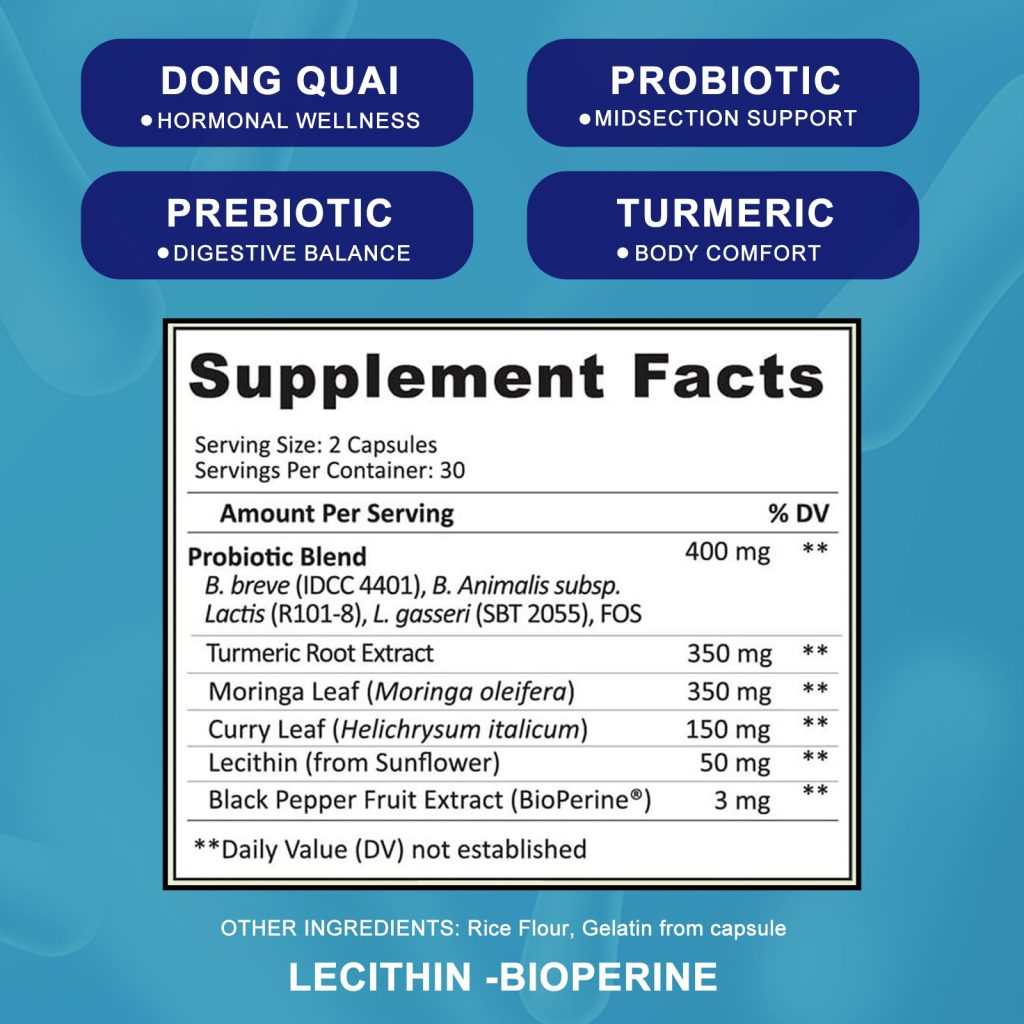
If you run the checklist above, Prorevive for Women – Menopause Support checks the boxes that matter most for midlife.
- Targeted strain: built around Lactobacillus gasseri, studied in the context of gut balance, not a generic blend.
- Sensible, focused dose: a thoughtfully chosen CFU count paired with the right strains.
- Hormone-free formula: designed to support your body through the gut, with no added hormones.
- Botanical support: turmeric, moringa, and curry leaf, plus BioPerine to support absorption.
- Vegan, non-GMO, GMP-made: clean label, transparent ingredients.
- 90-day return policy: enough time to use it as directed and decide for yourself.
Prorevive is a dietary supplement formulated to help maintain a balanced gut environment and support digestive comfort and everyday metabolic wellness during midlife. It is not intended to diagnose, treat, cure, or prevent any disease, and it works best with consistent daily use. These statements have not been evaluated by the Food and Drug Administration. Want the science behind the gut-hormone link first? Read the truth about probiotics and hormones, and pair your routine with these foods that fight menopause bloating.
FAQ
What is the difference between a regular women’s probiotic and a menopause probiotic?
A general women’s probiotic often focuses on vaginal and urinary support. A menopause probiotic is formulated around the digestive, bloating, and metabolic changes that may come with shifting hormones in midlife.
How long does it take to notice a difference?
Probiotics are designed for gradual support. Some women notice subtle changes within a few weeks, with continued use over 60–90 days. Results vary from person to person.
Is a hormone-free probiotic right for me?
Many women in perimenopause and menopause prefer to support their bodies without added hormones. A hormone-free women’s menopause probiotic works through the gut. As always, talk with your healthcare provider about what fits your needs.
Can I take a menopause probiotic with other supplements?
Many people do, but it is best to review your full routine with a doctor or pharmacist, especially if you take medication or have a health condition.
What should make me walk away from a product?
Vague “proprietary blend” labels, no named strains, promises of overnight results, and no return policy are all reasons to keep shopping.
Ready to Choose With Confidence?
You now have a clear checklist for picking a menopause probiotic for women that fits your body and your goals. If you want a formula that already meets every point — named strain, hormone-free, clean botanicals, and a real return policy — try BBHiravella’s Prorevive Menopause Probiotic with a 90-day return policy → Give it a fair, consistent run, and decide for yourself. Better sleep is part of the picture too; here is why your sleep pattern changes after 45.